Merry Christmas

Last post of the year, my good Adventurers, and unfortunately a bit of a dreary note in that I won’t be able to get Covenant out this year, which is just down to the way everything has fallen into and out of place – I’m sure you all know how it is.

I’m disappointed with that, especially as we were getting a little traction with it, but still, something to look forward to when the year begins anew, perhaps.

Anyway, thank you to everyone who stuck with me so far, and has liked and subscribed to my blog, and all of my trusted friends and family who’ve put up with me and helped me to keep going.

Merry Christmas to you all, I hope that you give much happiness and recieve many blessings, and I wish you a Happy, prosperous, and peaceful New Year.

Arron.

Comparisons

When developing and planning a book, it’s good practice to have an idea where it goes on your shelf, and more importantly, where you are aiming to put it in the market. That’s one thing, but your book has to be different. Further, it has to be yours in style and feel, and in how you handle the content/story.

We’ve discussed marketing etc before, because that’s one of the most important things for publishing and especially agents, so they know who to pitch it to, but it’s worth investigating what sets my book apart from those ‘similar-but-not-quite’.

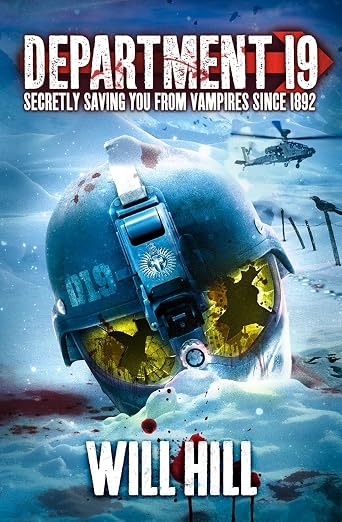
One of my ‘comps’ is Will Hill’s Department 19.

Looks good, the blurb promises good things. It doesn’t slouch on militaristic and action punch, but is more fantastical than Covenant because it’s aimed at a YA (Young Adult) audience, so it fits nicely in our comparison spectrum because it anchors where we’re going, but it’s similar enough to make my book the next step.

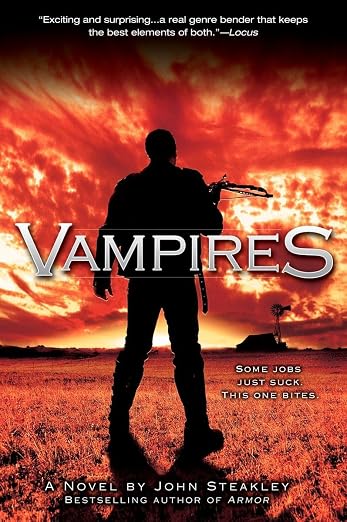
Covenant is harder-boiled than this, but not quite as much as our next comp, and one mentioned a good few times on my blog: John Steakley’s Vampires.

Ok, now we’re getting close. Grit, grime, giblets. It was turned into a film with James Woods, that’s how hard-boiled this book is. Violent and vicious with no holds barred, it sits firmly alongside our book – albeit further along the shelf.

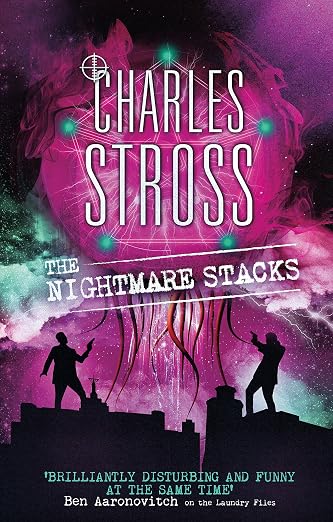
Between this and Department 19, we now have our two extremes, our outliers we use to bracket what our book has that our comps also have, and more importantly what they don’t. For this, we now need to turn to our third comp. Charles Stross’ The Laundry Files.

Described as: An innovative spin on H.P. Lovedcraft’s “Cthulu Mythos,” the Laundry Files is perfect for fans of weird fiction and bureaucratic humour with a technological twist.

Now we’re closer again to the fantastical of Eldritch Horror, but what Stoss does here is bring in the absurdity of the Bureaucrat, and unapologetic British humour/scorn that exists in spite of it. It hands an everyday realism to the whole affair, and it also bends the genres it touches upon. It’s David Brent, but his Office runs the admin department of hell.

Perfect – but we’re still not done. Will Hill’s work is often compared to, and likely inspired by, a cult UK TV program called Ultraviolet, written by Joe Aherne – and it is there, dear adventurers, we must go in the next blog post.

Until dawn.

Got You Covered

My man, the one and only (and recently award-winning – congrats Ken!) Ken Dawson over at Creative Covers has come through with some draft ideas for the cover of Covenant, my verisimilitude-thick, vampire-action coagulated, urban fantasy that combines John Steakley with Mi5. Still not sure on the actual title, might have to add ‘The’ or change it to ‘Winter Children’ but I’m torn, so for now it stays, although a spelling mistake (you’ll see it) may actually provide the answer.

Here’s one of those that closer match the idea. The background is placeholder, while we feel out all the ideas etc, but it will be set in a city, so this will change.

The astute will notice the mistake on ‘Owens’ but if this was changed to possessive: ‘Arron Owen’s’ that could solve the naming conundrum. Think how Clive Barker titles sometimes work, and we’re on the same page.

So, the work grinds on. I’m off for anther read-through and narrative plucking to finish things off and get them into shape. This will however be quite the landmark – I started writing properly in 2019.

This will be my fifth novel.

Anyway, this book about the long night has lingered in the darkness for too long. The sun is rising, and these vampires do not sparkle, but the humans are monsters too…

Antagonism

‘Whom the gods would destroy, they first make mad.’

– Reverend William Anderson Scott, Daniel, a model for Young Men.

‘The definition of insanity is doing the same thing over and over again and expecting a different result.’

– Albert Einstein (Attrib, but multiple other origins proposed).

We continue our little series about my latest, impending release The Covenant, with a touch of life imitating art. I’ve been disrupted significantly by a few problems over the past week or so, sometimes by people not doing what they said they would, others doing what they promised not to, and a small pest infestation – which despite my best efforts and those of some professionals, continues to keep me awake and is slowly driving me mad.

I know what you’re thinking: ‘But Arron, how do we know the difference?’

I ask that question of myself – hence the quotes at the beginning of this meandering post as I keep trying to overcome challenges and maintain that goal of success in the face of things that aren’t huge – they’re just silliness chewing the ropes of the bridge which I have to stop and fix before I can cross the chasm.

Maybe I should do an Indiana Jones, cut the rope and hope I don’t lose my grip when I faceplant the cliff…anyway – let’s meet our book’s villain.

+++

Making enough noise to raise the dead, Jake and his two cronies raided the office. Even with enhanced limbs, the bolt and padlocks were so thick they had to take bolt-cutters to them. The rest was easy enough, prying open doors, locked cabinets. He wouldn’t have dreamed of going at this so quickly or boldly so close to dawn without it being a commercial property, where he could get in and out without Human resistance.

They trashed the desks to make it look like petty theft, his men having fun this time, ripping printers from the wall, smashing furniture. It was imperative that the authorities considered it the work of hoodlums, druggies – whatever was in vogue as the target this week. The one thing Jake wouldn’t condone was smashing up the toilets or leaving the taps on.

That was just downright wicked.

The computer purring into life disturbed his thoughts of selective violence, as his team watched for signs of activity outside. The CCTV cameras covering the loading yard, manager’s office and banking desk were state-of-the-art. He could tell they had infrared lenses, motion activation, and were connected to 24-hour security monitoring. Everything was secure, and all of it completely useless to prevent a Winter Child about their bloody business. Still, being careful was ingrained, the team were told to avoid touching anything in those rooms, and he used the secretary’s computer outside the office.

Jake snatched the data stick from his front pocket and jammed it into one of the USB ports on the machine. The window popped up, and he tapped a few keys, activating the executable for his boffin’s prepared mining program. Nothing too elaborate, it would just rip any databases to bits, converting the information into a format easier to trawl through later.

Windows containing pictures, reams of names and numbers all flashed up, only to disappear a second later, and for good measure the program erased the trace of it ever having been there, covering any tracks left for a casual search. It would take a forensic data examination to discover anything. With the break-in and damage, no-one would even think that the real target was a couple of names and places in a folder dealing with usual business.

A dialogue box sprang up, demanding he remove the stick, and as soon as he did, he was up from the desk and they were headed out, leaving the doors wide open to encourage any rogues wandering past to leave some evidence pointing away from Jake’s endeavour, maybe even steal one of the computers for good measure. It would take time to recover them, if at all, and who would care about any of it then?

The drive in daylight was uncomfortable in the van, despite the thick UV protection. Working for the House or against it, Jake felt a pang of nostalgia for sitting watching a sunrise, or sunset – but those days were long gone. The only thing that mattered now was the mission. He was against the clock in more ways than he liked. With the information given by his source, he might only have one chance to stop the Treaty being renewed, and hopefully there was enough on the drive to get ahead of the game. It was December, freezing cold outside, but an adjusted metabolism made him swelter in the heat, the van hurdling road humps, bumping along over potholes.

It began with murder, and it would end with murder.

+++

That’s your lot, have a good day, Adventurers.

Armistice Day

Photo by Elina Sazonova on Pexels.com

Usually, I would produce a ‘war’ poem for today, a special day in my calendar due to family and friends who have served in the armed forces, but will perhaps instead share an experience from one of my dreams several months ago, that now, in hindsight was always meant to told here.

All I can remember is that I was travelling down a dark country road, through some village somewhere, the tarmac barely narrow enough for the vehicle I was riding on. It was though I was sat on the tailgate of a truck, gently coasting down this road – hemmed in at both sides with dry-stone walls and privet hedges, watching behind.

Upon this road marched many men. They were British soldiers, but oddly not the typical Lee-Enfield and Brodie helmet, but equipped as the British Army in the 1960’s. They were but silhouettes, I could see no rank or insignia of Regiment.

They did not march, instead they had ‘broken step’ i.e. they were walking, in loose formation, not in tight rank and file. Perhaps a whole company of them (circa 300 in wartime) trailed the imagined truck, all of them whistling the same tune, in good spirit, clearly enough I could discern the difference in skill and age.

I recognised the tune from somewhere, but did not know it off the top of my head. Their whistling haunted me into my wakefulness, and even as I type this, I can hear it now, can see them following behind me.

The first thing I did that morning was to try and find the tune. Instinct told me it was a bugle call, for it sounded like the notes a bugle would play – the subject of the dream also a clue.

I found it.

It was called ‘Charlie Reveille‘, and it used as an alternative at the end of Remembrance Day services to mark the close of the two-minutes’ silence.

They were whistling this over, and over, heavy boots trampling along with it, rifles slung or at low ready, duty done, taking it easy with a last walk down a road.

Going home.

Lest We Forget.

Ruthfullness

More tales from the dusk-haunted dark.

Ruth Cassidy is our secondary POV deuteragonist. She wore a couple of different names before I settled on what she now goes by, and it was more by accident than design she was given something biblical. After all, Ruth is generally regarded as a heroine, and the etymology of her name means ‘friend’.

She’s an excellent foil, and brings a cerebral companion to the pages. She’s no slouch at fisticuffs, though.

+++

Her rest was shattered by a rough hand.

‘Quickly! Get up!’

Ruth was awake in an instant, but when her ears processed the accented words, she knew. Lucid dreaming was a curse, but a Child’s nightmare was an ordeal. No-one ever told her about that as a perk of immortality.

‘Antoine? What is the matter?’ She knew full well, but what else could she say? The past was written.

‘They are all around the house!’ Her French colleague was clambering on all fours in the dusty attic. Characteristically dim and replete with cobwebs, it was where the two of them hid during the day. They shared it with very little room, having to crawl at best, or writhe along on their bellies, almost slithering over each other at worst. She endured that now, carefully pressing weight onto elbows and knees, having quickly established which timbers could be trusted.

Small holes poked or plucked in the thatch by birds or mice provided the vital ability to see. Being under a flammable roof was not Ruth’s idea of security, but it was good enough for a stopover during a lazy afternoon in the somnolent August of Vichy France, a safe haven from the insanity.

They were wrong this time.

Dusk was hours away, and she could smell the nervous reek from Antoine as they lay close together to peer out onto the road, seeing the activity. Policemen with their Vichy armbands stood in intervals. They had been clever, parking their cars and a truck further down in the village, and then she saw the men in dark leather trench coats, black gloves and fedora hats.

Merde,’ she whispered, just enough to carry the word to Antoine’s ear. ‘Gestapo.’

‘I am certain I wasn’t followed!’ Antoine said, his protest hushed, but intense.

Ruth believed him. Then in the attic, and even now, years later, the conviction in his voice blunted her well-worn knowledge he was lying. The past was fixed, inviolate of her hindsight, and she spoke as she always had to, surrendering to the memory despite the urge to scream the denouncement in his face. ‘Maybe Therese was spotted in town?’

‘Did we leave anything downstairs?’ he asked.

‘No, I brought everything up. The ornaments are in place.’

The Vichy police approached. Ruth remembered a black and white film she’d seen in London several months before, with the caricature goons. These were not the same. Capable, observant, and fighting a war to win. ‘Well fuck it, so am I.’

Antoine didn’t speak English, certainly not the American vernacular, so he merely shrugged. Ruth felt the urge to bite through his treasonous neck, retrospectively wished she had. A tall man in black directed the officers down the road, towards the farmhouse. He drew his pistol and the group disappeared. A moment later, Ruth heard the front door crash in, and shouting in French and terrible, accented English. They knew she was here.

Only a handful of people could have told them, and the most likely was lying a few feet away from her now. Ruth crawled back for the weapons stored in the attic with them, carefully undoing the straps to the wax-coated bag, lifting the guns with steady, constant care. She fought to concentrate, as below her, crockery toppled, doors crashed open, and warnings hurled through the air. Antoine grasped a Sten submachine gun she passed across, assembling it with painful slowness to prevent the catches and springs giving them away. Such noises carried far, and were distinctive.

Finally, the boots clomped around on the polished boards of the bedroom above which she lay. The door to the attic was hidden, concealed at the top of a bookcase carefully restacked every time they were both safely up there. It was a trick used the world over – even in the latter years by the Winter Children. Ruth readied her own Sten, inserted a magazine, and slowly…slowly…cocked the gun.

Only a Human could design and make a gun like this. A gift from her spymasters in the F-branch of the British Special Operations Executive, it was an awful thing, resembling a bicycle pump put together by squint-eyed welders, and was as dangerous to the user as the enemy. A weapon of desperate times.

Yet, in her mind its cheapness added the British charm harboured for an underdog, was rugged enough for her to put faith in it, and was pretty spiffy with the side-loading magazine, which allowed her to fire it lying prone – even if it was temperamental and had the worst sights ever conceived.

Hot damn, she loved it, and it was perfect for the job.

Almost reading her violent thoughts, sudden shouts tore the quiet countryside apart, the sound of feet running across gravel interrupted by the rip of automatic weapons, harsh cries of pain from male and female throats.

‘My God,’ Antoine breathed, ignoring Ruth’s instinctive twitch. He peeped through another thatch-hole, ‘they killed Therese and Étienne!’

Ah yes, the genuine stab of shock. Ruth detected his keen discomfort, which covered the deceit. The shock-horror of an agreement going up in smoke was misread as simple horror, and why not? She felt the same way.

There was no reason to stay quiet now. The French farmers had tried to deflect and dissuade, then created a distraction by running away. Bloody stink reached her nose, the faint cast of it enough to tug at her urges. The Vichy officers could just burn down the house now, but she heard a shout directly from below, and the thud of books and ornaments being tossed down. They were either experienced, or they knew what they were looking for. In her ignorance, she couldn’t imagine their French allies being so careless.

‘Here! Here!’ a man called in German accented French.

Ruth didn’t waste time, the farmhouse timbers were sturdy, but her hobnail boots were more than equal to her intent. Pivoting both feet up, she put them together, only to smash them both down through the hidden hatch, momentum carrying her through the gap. She crashed down on the secret policeman beneath, sent him reeling with a sharp cry and scads of decade-old dust and animal droppings.

She was on her feet instantly, grateful the last rays of sunlight were angled away from her landing. The man in black was one of the officers from the road, and although stunned and coughing, he struggled to his feet. His eyes went wide as he realised her Jewish heritage, even cloaked in cobwebs and crud.

Untermensch! Achtung! She’s here!’

Betraying that they did know who they were after, his warning was the last time he spoke, Ruth launched at him with immortal speed, fangs enfleshing. She gave in to the thirst, provoked by the farmers’ murder, tearing and slurping, the hot nectar pulsing down her face and throat in the wanton savagery. Soon the pulse was gone, and the bitter sting of his death made her baulk, break off from the dry, dead artery.

The House didn’t encourage such behaviour, even in war. It was forbidden on penalty of death, no matter the circumstances, to give into the barbarity of the Dark Times, but her earlier sentiments stood. The brutal reality in war, of sheer survival, was reasserted when bullets crashed through the door, big rifle slugs ripping into the thick farmhouse walls behind her – but she had already moved. Leaping up and over to the ruined door, empowered by the stolen vital fluid, she put her shoulder to it, punching it from the frame, hinges exploding in a ping of screws and rivets.

Beyond it was the landing, and a banister guarding the stairs. The panicked cries of two men trapped pinned by the oak door she smashed into them. Fighting both struggling men at once, Ruth levelled her Sten, ripping a long clattering burst through the wood at point-blank. The two Vichy policemen writhed under the attack, loud cries quickly ended when they dropped dead, shredded and bleeding sacks of meat. Ruth licked her lips, savouring the sanguine taste sticking to her face, the heady miasma of blood and gunpowder thick.

She paused only to reload, and in half a second, her gun and body were ready for more.

+++

Until the morning, Adventurers.

First, Knight

As we progress towards the launch of The Covenant, we continue with a few spotlights. Here’s a snippet of what’s in store and introduces our primary deuteragonist, Robert Knight:

+++

Thursday 10 December, 1808 Hrs Zulu, Afghanistan.

When the bomb went off, crimson gore spattered the windscreen and the driver’s window in a thick slap. Thumping hailstones rattled the right flank and side of the vehicle. Robert Knight flinched from the noise and the sudden pressure buffeting the armoured Toyota Land Cruiser, rocking it onto its left side, before it crashed back down with a nauseating wobble.

Reaching for his pistol, Knight could hear the distorted sounds of the Close Protection team shouting, as the checkpoint they’d stopped at came under attack. Almost as an afterthought, Knight’s ears caught up to the warning call – now very much only audible in his mind as a distant, ghostly voice.

‘Bravo Three! Contact right–’

Crazed by explosive force, and peppered with what appeared to be shotgun pellets, the damaged window prevented him from seeing outside clearly. The blood was clinging thick, filling the striations and craters punched into the exterior surface of the hardened glass. Knight could barely make out people hurrying away, the stunned silence suddenly pierced by a siren.

Shocked back into action, Knight jammed his unfired pistol back into the rigid holster on his chest, and gripped the steering wheel and gearstick. Getting away was better than fighting. Red and amber lights flashed across the dashboard, but the car was still running, and he thumped his foot down on the accelerator. The large beast was chugging smoke from the front, coughing and groaning fit to die, but it launched forward to ram the car in front, and shunted it clear.

The tyres were burst, but the run-flats still struggled to obey, despite feeling like the blood covering the vehicle had him glued to the road, but he had to get his Close Protection team and their Principal out of danger. The vehicle was the best way to do that. Gunning the huge five-litre V8, it tore free of the clotted checkpoint traffic. His brain suggested the switches for the blue lights and sirens hidden under the bonnet, and he obeyed, washing the scene with an electronic squeal, and a colour other than scarlet.

Gunfire clattered into the flank of the Land Cruiser, the bodywork being flailed with chains, raking the metal hide as he sped away. The roaring engine defied the bullets trying to claw their way in, to kill him and paralyse the car, leaving it at the mercy of another bomb or rocket-grenade. He wasn’t going to allow that. More weapons barked in reply, the sharper pop-pop of American M4A1 assault rifles at the checkpoint, covering his escape.

Knight swerved between the traffic as best he could, the dying vehicle bumping along the uneven road on the run-flat tyres. His colleague was already on the radio, the hysteria from the initial contact subsiding quickly, telling HQ they were coming, and what condition they were in. Five minutes of sweat and concentration later, they pulled in through the gates and he parked in the spot reserved, baking in the fierce sun while everyone checked their fingers and toes.

He looked at the VIP passenger in the rear view mirror. Catching his eye, he offered the Brigadier General a shrug. ‘I’m sorry we’re late, sir.’

The staff officer commanding the British Task Force just smiled, patted his shoulder; and the team hustled him away to the safety of thick walls and air conditioning inside.

+++

That’s it for now, until the morning, Adventurers.

Deuteragony

Deuteragonist: deu·ter·ag·on·ist
noun: the person second in importance
to the protagonist in a drama.

Oxford Language Dictionary

The Covenant is a bit special for me, since it features the two halves of the same coin: the first POV and character of the protagonist (Robert Knight), is joined by what essentially is a second protagonist who is supposedly (according to classical Greek storytelling) a closely following supporting character who gets a good whack of words devoted to them too.

That’s not exactly what I wanted, so instead I opted for mutual ‘deuteragonism’ for the hero, and heroine respectively, so they had balance for their individual POV. This was essential – as the whole book subplots around it, and whilst certainly not unique to my writing, it is unique within my own catalogue.

It is, through this lens, that my work itself stands out from the ones which surrounds it, I think. In the previous blog posts, I mention Joe Aherne’s Ultraviolet, Will Hill’s Department 19, and John Steakley’s Vampire$, but they take very different courses from The Covenant.

So, what is in my book? Well it’s got a few things: a tortured soldier and close-protection officer battling supernatural PTSD, an immortal American frontierswoman trained by SOE during WWII, hard-boiled action, high-intensity counter-intelligence operations against an enemy that technology can’t detect. Car chases, ballroom dancing, frenemies-to-lovers, a fight in a skyscraper (kind of), copious military hardware and jargon, the desperate question of what it is to be human (kind of) and the terrible power and tragedy of the Winter Children (aka vampires – a term which is never used in the book).

Sometimes cliché, sometimes almost biblical, never boring.

Both our characters are put through the wringer equally, either within their capabilities or not, and they can only rely on each other through the pain.

Deuteragony.

Until the morning, Adventurers.

Dusk Before Dawn

“Even the darkest night will end, and the sun will rise.”

Victor Hugo

So what does Covenant have that others don’t?

If you’ve read my previous post, you’ll understand what I aspire to with this novel, standing at circa 100,000 words – a foray into a parallel, mostly hidden society of immortal bloodsuckers who co-habit this crazy world of hours – albeit after dark.

Here’s the blurb, as promised:

+++

CHRISTMAS IS A TIME FOR PEACE AND GOODWILL TO ALL…

When a high profile assassination threatens the dubious peace between Humans and the immortal Winter Children, Robert Knight, a soul-scarred veteran of this strange cold war, is reassigned from his Close Protection duties with the army to escort a diplomat to sign a treaty before the deadline of Christmas Eve.

With mere days to avert disaster, Knight is sucked back into a world of complicated intrigue, ancient oaths, hatreds and lies he’d hoped to escape for good. Worse still, he is reunited with an old flame, reigniting their tortured past, testing his loyalties.

As the nights draw out, and the attempts on the emissary’s life become as numerous as they are dangerous, Knight begins to suspect everyone is playing a different game entirely, and that his allies might just be out for his blood too.

+++

Nothing is clear cut, in this action-heavy, high-concept, urban fantasy thriller, where everything is to play for and nothing is for certain except death and taxes.

In the next couple of posts as we stalk towards ‘release day’, I’ll go over what I think makes The Covenant stand out from those it seeks to stand on a shelf beside, and as promised, give you a bite or two.

Until the morning, Adventurers.

Schrodinger’s Book

Proof Copy of ‘Covenant’ (Working Title) Courtesy of Arron Owen

It exists, but also not quite.

Andy McNab meets Abraham Van Helsing in this (soon to be) Christmas Cracker. It should perhaps be considered like Die Hard: an action film set at Christmas, but I don’t know if that makes it a Christmas film?!

I’ve been slaving away on this for a while now, and after submitting it to twenty agents. The clock runs out on the last few tomorrow, and I doubt I’ll hear from any of them if I already haven’t. At least it will clear the decks for release to market, depending on what that market actually is – since Amazon is being tricky with where this would sit.

If you’ve ever seen the British TV series called Ultraviolet, released in 1998, with Jack Davenport, Susanna Harker, Idris Elba (Luther, the MCU) and Phillip Quast, written by the very talented Joe Aherne, you’ll know what Covenant aspires to, while capturing a British flavoured John Steakley’s Vampires.

It’s an adult complement to Will Hill’s Department 19 YA Novels.

My cover designer is on the case, and so we should shortly have a nice glossy, professional coat on this thing. Twenty years it has taken me to write this book, through various iterations and terrible, tortuous revisions of ghastly prose (appropriate for All Hallows Eve).

Over the next few weeks, I’ll be revealing the cover, the blurb, and some snippets to whet the appetite. Forgive the absence, and the dust, but that’s just fine for a crypt…

Have a great day, adventurers!